Define
Write the component contract once: identity, pins, ports, modes, UI controls, dependencies, and metadata.

Aether lets developers define the hardware contract once: pins, ports, modes, UI controls, dependencies, code blocks, Capsules, and generated Arduino output.
Developer content now follows the Aether AI page structure: staged cards first, then one focused mode switch that shows how reusable definitions become upload-ready output.
Write the component contract once: identity, pins, ports, modes, UI controls, dependencies, and metadata.
Turn graph nodes, Capsule overrides, variables, and board mappings into concrete Arduino inputs.
Create includes, globals, setup, loop, readSense, readAct, branch logic, and helper functions.
Compile, install required libraries, flash the selected board, and keep progress visible in the workspace.
Developers can work at the component level or follow the generated sketch path, while Aether keeps the same source of truth underneath.
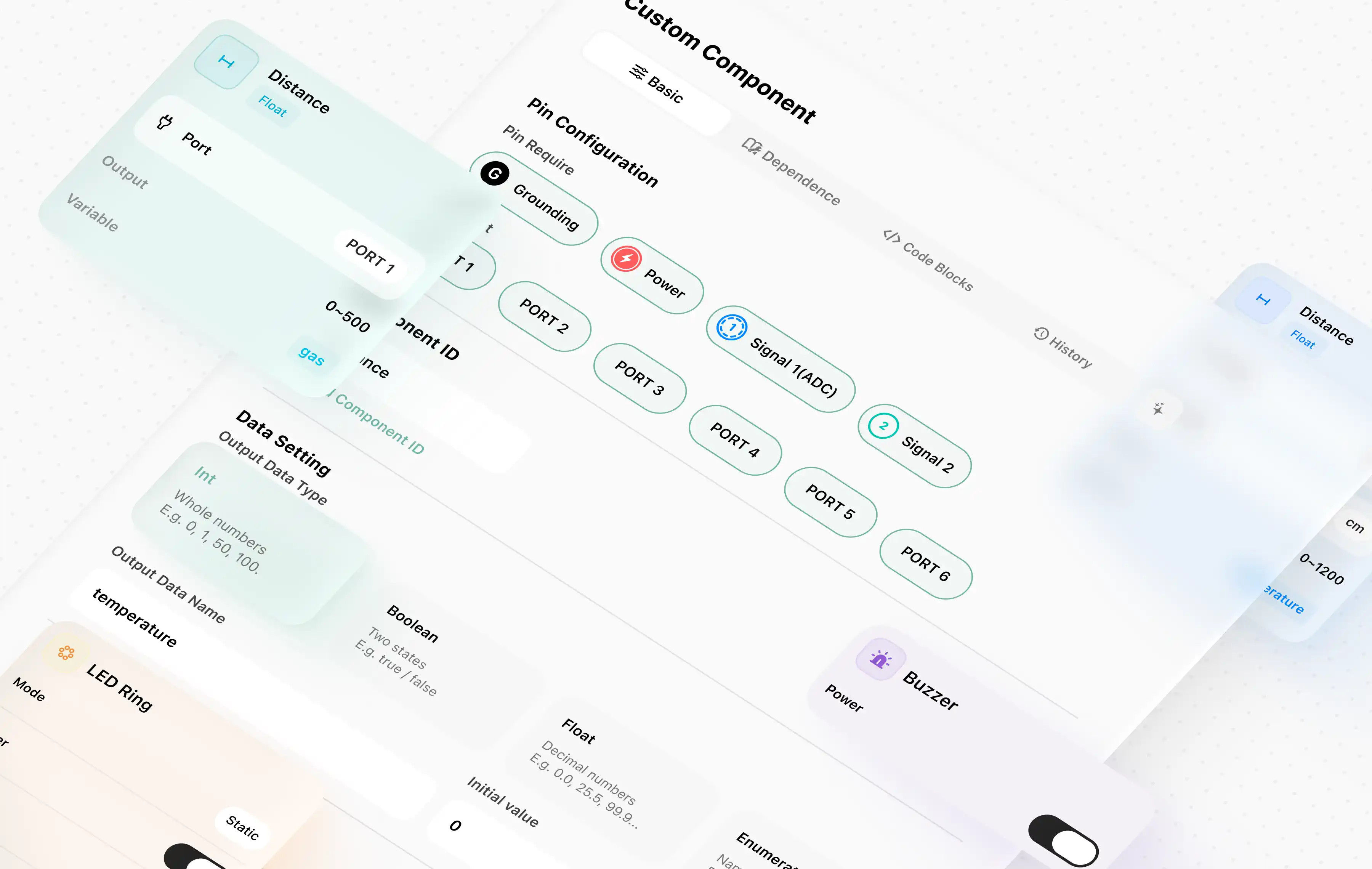
Hardware requirements, UI templates, mode code blocks, helper functions, and dependency metadata stay together, so a node can be reused without losing implementation detail.
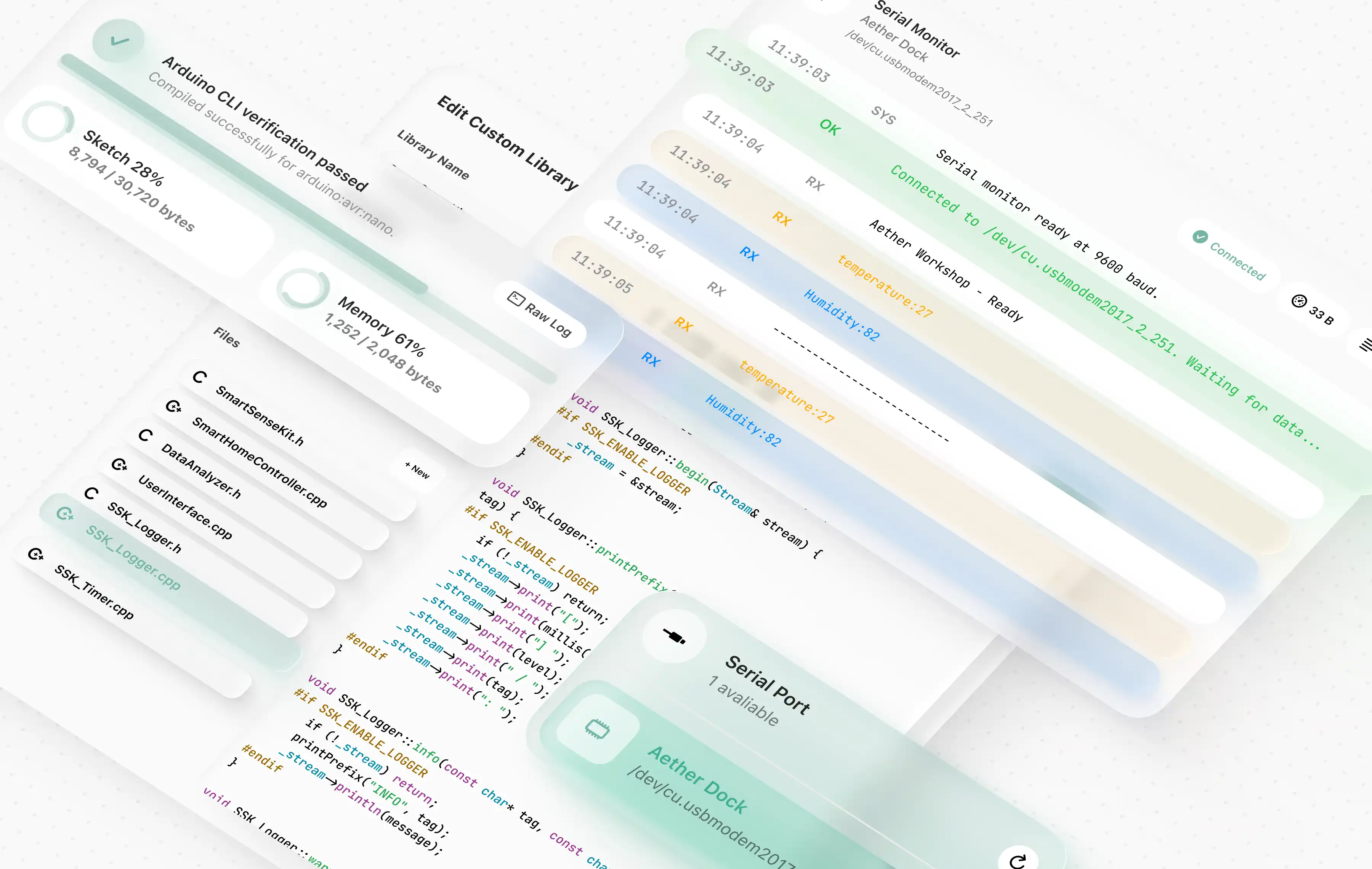
Aether resolves ports, expands Capsules, generates the sketch, installs libraries, compiles with Arduino CLI, and reports upload progress inside the same workflow.
Identity, hardware rules, code blocks, interface controls, dependencies, and profile metadata stay in one reusable contract.
Reusable graph modules unfold with project overrides, exposed ports, parameters, and recursion checks before generation.
Arduino Index libraries, built-in support code, and custom source files travel with the component that needs them.
Missing references, broken bindings, incompatible ports, and mode-specific gaps are surfaced before upload work begins.
Only mode-specific differences need to be written while shared setup and helpers stay on the base component.
Profiles describe usage, wiring, and output data so future AI plans can recommend the component accurately.
Start with a reusable hardware idea, then keep the contract, code, dependencies, and update path inspectable.
Create a distance sensor component with port rules, output data, and a preview control.
Package a custom RGB LED Act component with mode-specific code and Arduino dependencies.
Expand a Capsule into a project while preserving exposed parameters and hardware bindings.
Resolve a missing library before generating the final setup and loop code.
Compare a component commit before adopting changed pins in an existing project.
Build an AI profile so future graph plans understand the component's wiring context.